Journal
What a cover-up can and cannot do
Dark covers light, bigger covers smaller, and some old tattoos need a lighter touch or a dermatologist first. How an artist decides.
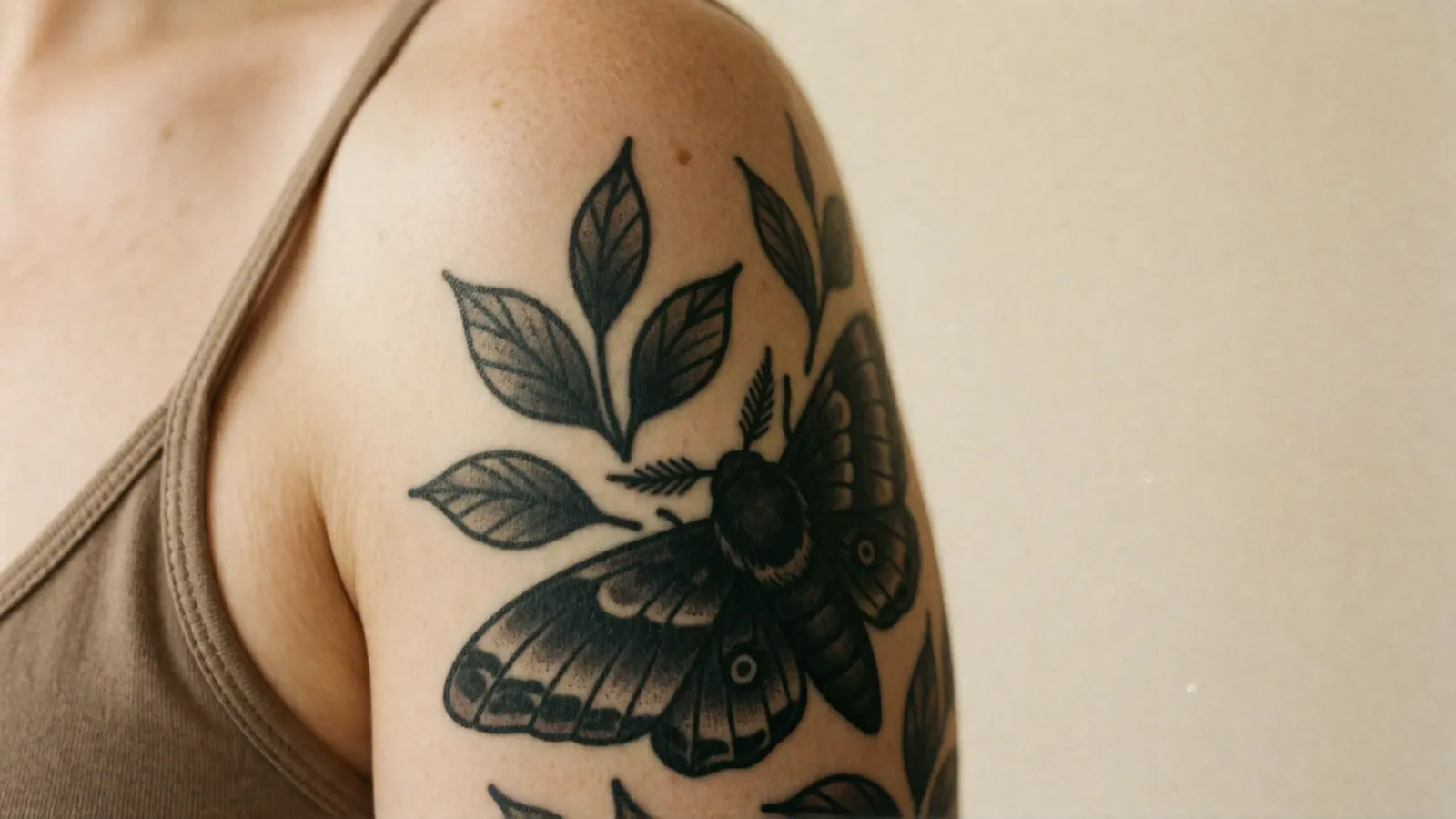
The photograph behind this heading is AI-generated: the person in it is not real, and not a client.
Dark covers light, and bigger covers smaller. Nearly everything else about a cover-up follows from those two rules, and so does most of the honesty an artist owes you when you bring one in.
A cover-up is usually darker and larger than the tattoo it covers. Your artist will say so plainly, and will say when a piece cannot be covered well.
Why a cover-up is darker
Ink sits in the skin and not on it, so a new tattoo does not paint over an old one the way paint covers a wall. The old lines stay where they are, and they show through any new work that is lighter than they are.
A new design has to be dense enough to absorb what lies under it. That is why a cover-up so often turns into deep black and gray, heavy foliage, or solid shapes, and why it is hard to cover a dark tattoo with a pale one.
In the studio's own words, a cover-up is a new piece designed over an old one, usually darker and larger, with the old tattoo worked into the new drawing's shadows rather than hidden under paint.
Why a cover-up is larger
The new drawing has to extend past every edge of the old one, because a rim of the old tattoo showing around the new one would look like a mistake. A small old tattoo can need a much larger piece to be covered well.
Size is also where placement matters most. A tattoo on a wrist has very little room around it to grow into, and one on an upper arm or a calf has a lot.
What the old tattoo decides
A cover-up always starts with a consultation, in person, because the old tattoo's darkness, size and placement decide what can go over it.
A photograph hides what an artist most needs to see: how dense the ink is, how raised the lines are and how the tattoo sits on the curve of the limb. You can bring pictures as well, but the skin is the evidence.
Working the old tattoo into the new one
Kofi and Dario do the studio's cover-ups. A dark old tattoo is where Kofi likes to start. His cover-ups use the old ink in the new drawing's shadows, and he will tell you honestly when a piece is too dark to cover well.
Dario reworks old tattoos as well as covering them — sometimes a faded piece needs its lines restated rather than hiding.
Some faded pieces are better reworked than covered: the lines restated and the shading refreshed.
When the honest answer is a laser first
Some old tattoos are too dark to cover well. When that is so, your artist says so, and a few laser sessions at a physician's practice first can make a cover-up possible.
That is medicine and not tattooing, and why laser work belongs to a physician's practice gives the rule with its source. Your artist will tell you if your old tattoo is one of the ones this applies to, and will not start a cover-up that cannot be done well.
- NYS Board for Medicine, Use of Energy Devices Including Lasers as the Practice of Medicine (opens the source in a new tab) Removing a tattoo with a laser is the practice of medicine in New York, done only by or on the order of a physician, physician assistant or nurse practitioner.
What a cover-up takes
A cover-up is almost always larger than the tattoo it hides, and large pieces take more than one sitting. A piece that takes more than one session is tattooed with at least three or four weeks between sessions, so each part has healed before the next is added beside it.
Your artist says at the consultation how many sessions to plan for, and quotes the hours in writing.
What it costs
A cover-up is priced the way custom work is, by the hour. Nobody can quote it from a photograph, and this site does not try to: the quote comes after your artist has seen the old tattoo.
One rate. Every artist here works at one rate: $180 an hour, counted to the half hour, and never less than the $120 shop minimum — the setup, the needles and the station cost the same for a dot as for a forearm. At your consultation your artist quotes a range of hours, and a session never costs more than the top of the range you were quoted. Custom work is quoted in writing after your consultation, never before it.
Two covering pieces from the portfolio
The cover-up portfolio describes each piece by its line, shading and color. Every one is a generated demonstration and is captioned as one.
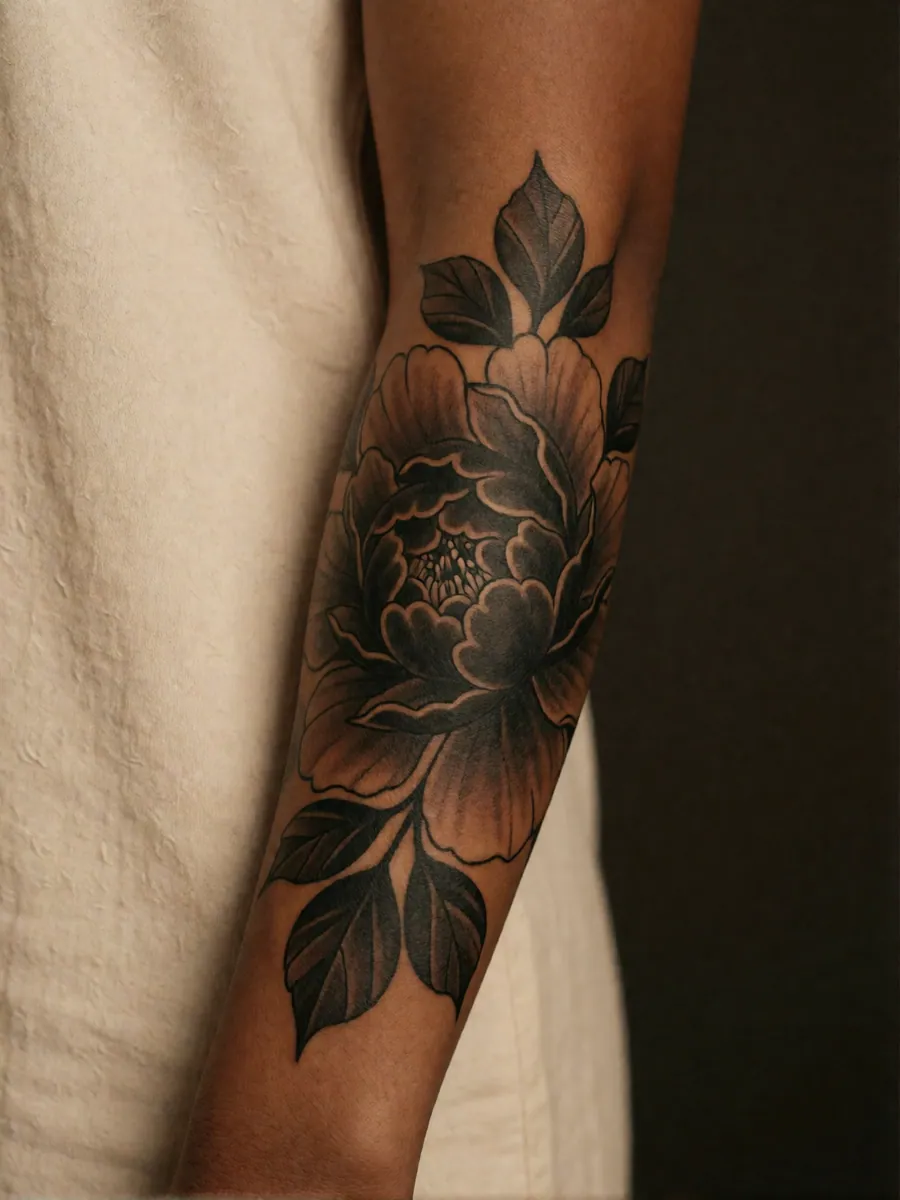 AI-generated image: not a real person, not a client.
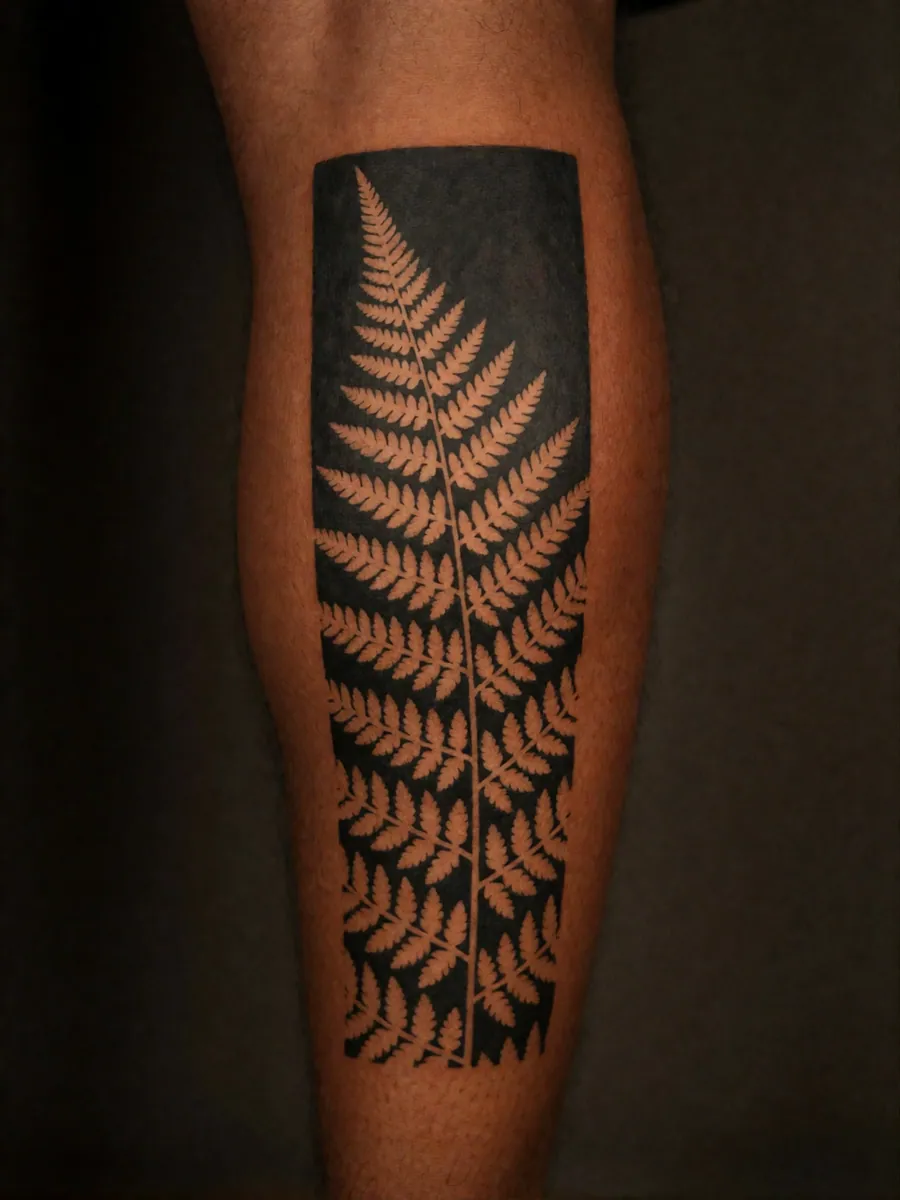 AI-generated image: not a real person, not a client.
Before you come in
Bring the tattoo itself, and bring any ideas you have. You can upload up to three reference pictures when you book.
Meet first. A consultation is thirty minutes with the artist who will tattoo you. You bring the idea and any pictures you have; you leave with a placement, a size, a written quote in hours and a date if you want one. There is no charge for it, and nothing is owed if you decide not to go ahead.
Where to go next
- Cover-ups and reworks — the service, and who does it.
- Laser work is medicine — the page on what a studio cannot do.
- Consultations — where the old tattoo is seen in person.
Book a consultation
Book a consultation with the artist you want and bring your pictures. There is no charge for it, nothing is paid online, and nothing is tattooed until you have met.