Journal
How fine line tattoos age
Every line softens and spreads a little over the years. Why the smallest details are sized up, and where fine line fades fastest.
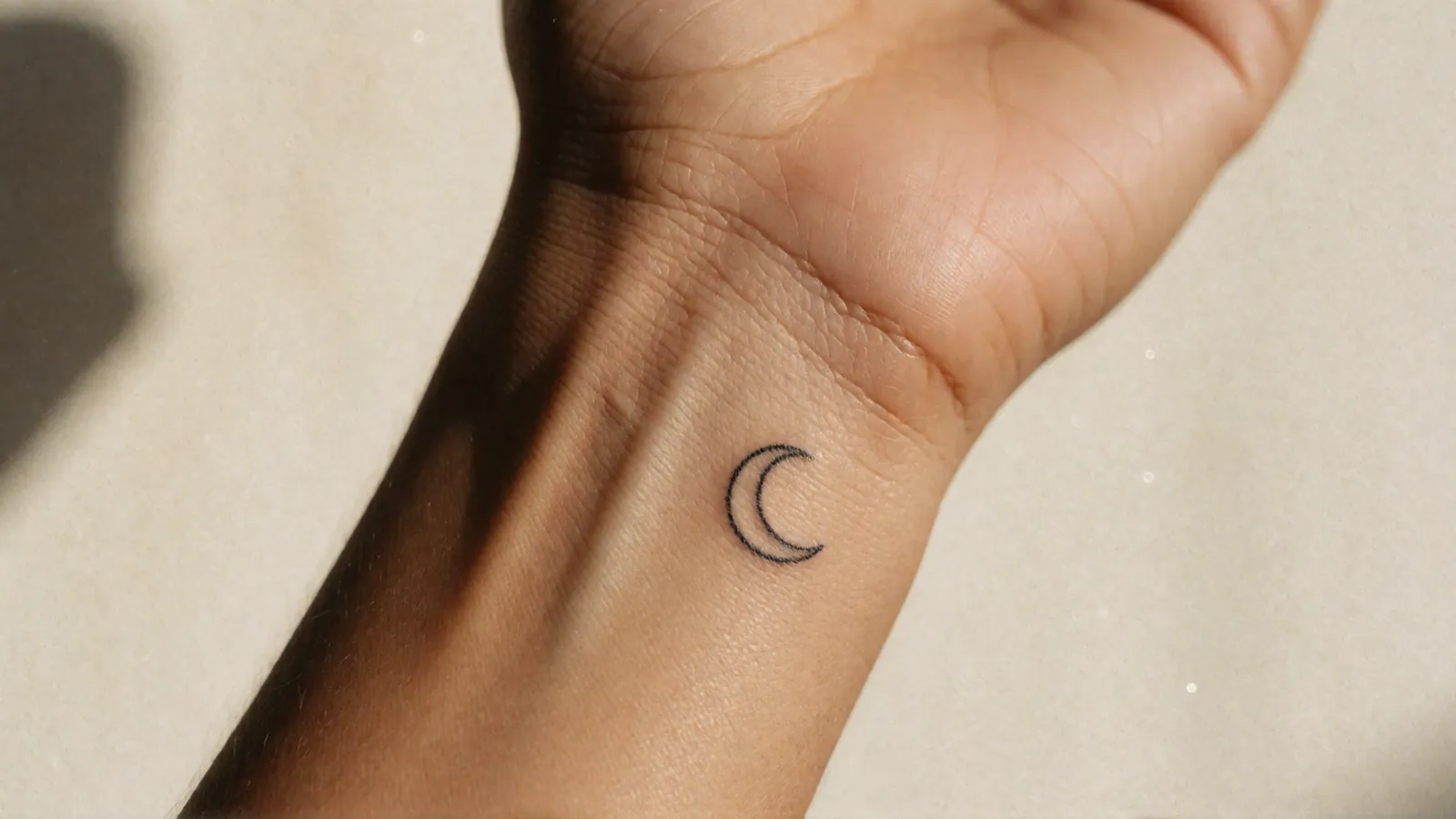
The photograph behind this heading is AI-generated: the person in it is not real, and not a client.
Every tattoo softens as the years pass, and a fine line softens most visibly, because there is so little of it: one thin line carries the whole design. The way to a fine line tattoo that still reads later is not to avoid the style. It is to size the piece for the skin it will age on.
A fine line softens and spreads a little as the years pass, on everybody. The smallest details are sized so the piece still reads when it has.
Why a line spreads
Ink sits in the skin, and skin is living tissue that renews itself all through your life. Over the years the edge of a line loses some of its crispness and widens a little. A bold outline can afford that, because there is plenty of it. A line as thin as a hair cannot afford much.
Nothing has gone wrong when this happens. It is what skin does to every tattoo, and the only choice is whether the drawing allowed for it.
What gets sized up
Where two lines run close together, the gap between them is the first thing to go: each line widens, the gap narrows, and the two read as one. So the gaps are opened up at the drawing stage. The same goes for small enclosed shapes, tight loops, dense little clusters and fine stippling. Each is enlarged, loosened or simplified until it will still read when the lines around it have spread.
Ines will tell you at the consultation how a fine line ages — it softens and spreads a little over the years on everybody — and she sizes a piece so it still reads when it has.
In the studio's own words, fine line work is thin, even lines from a small needle grouping, little or no shading, and a lot of bare skin around them. Delicate, precise and small to medium in size.
Where fine line fades fastest
Hands, fingers and feet fade fastest. Your artist will say so before tattooing them.
The pattern is the same anywhere: skin that is washed, rubbed or bent all day wears a fine line down sooner than skin that is not. The sides of the fingers, the palms and the soles are the extreme cases, and the inside of a wrist or an elbow can be a milder version of them.
The sun is the other one. The aftercare instruction is this: no swimming, baths, hot tubs or tanning for at least two weeks, and after that, sunscreen on it whenever it is in the sun.
Small is fine, and too small is not
Fine line work is often small, so many pieces fall inside the shop minimum.
The shop minimum is $120. It covers a small piece of up to about forty minutes: a new needle cartridge, fresh ink caps, a wrapped station and an artist's time are the same whatever the size.
Small is part of what a fine line does well. What your artist watches for is a piece that is small and also detailed, because the detail is what the years take first. Saying so at the consultation, and suggesting a little more room, is part of the job.
What your artist may suggest
The usual suggestions are sizing the piece up a little, opening the gaps, dropping the smallest details, or moving the design to flatter skin nearby. None of them changes what you asked for. Each is a way of keeping the drawing you chose legible for longer.
If you would rather have a piece that holds its sharpness without any of that, a bolder line is the answer, and the consultation is where to ask about it.
Touch-ups
After it heals. One touch-up of a piece done here is included within six months, once it has healed, if the aftercare was followed. Hands, fingers and feet heal unevenly on everybody and are touched up at the hourly rate. That is the studio's policy, not a promise about how any skin will heal.
Who draws it here
Ines draws the studio's fine line and single-needle work. Ines's days and work lists the days she works and the hours she keeps for consultations.
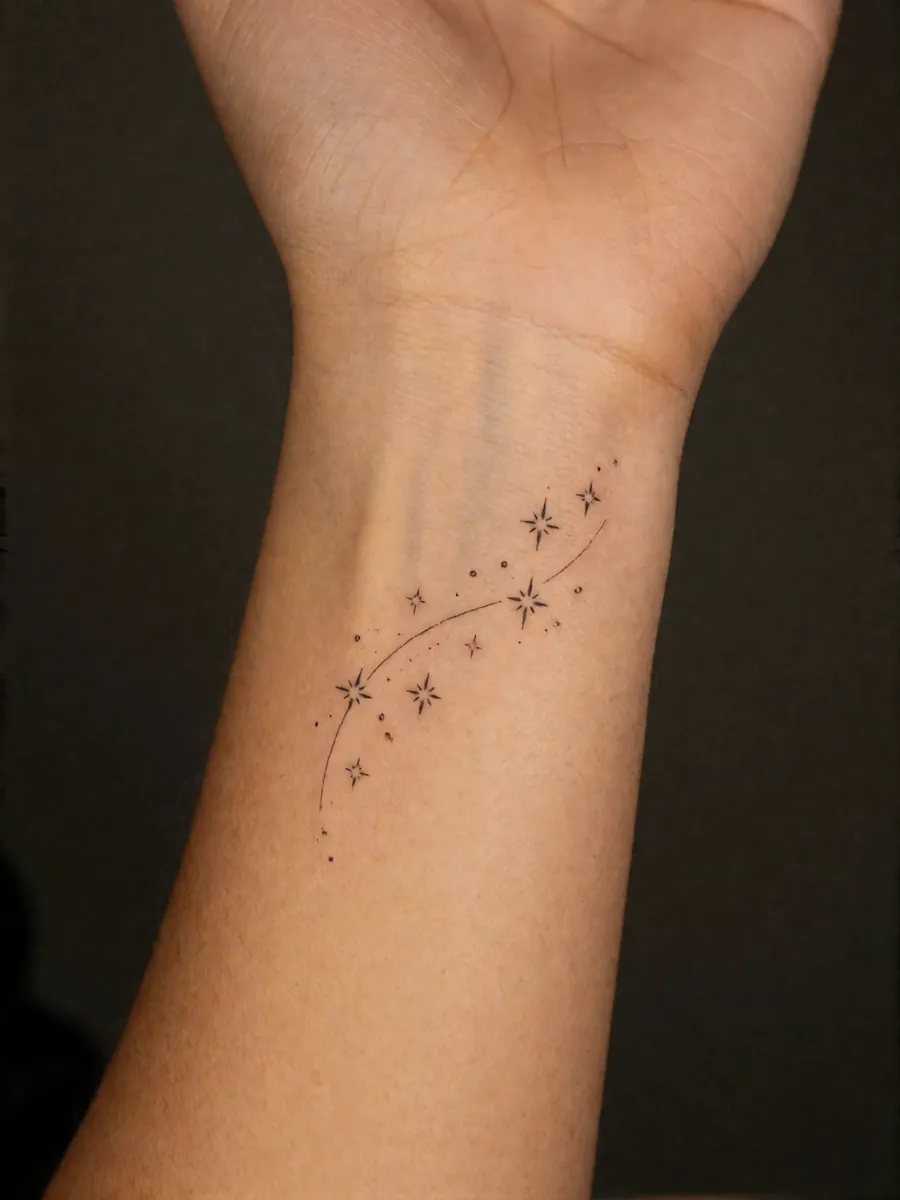 AI-generated image: not a real person, not a client.
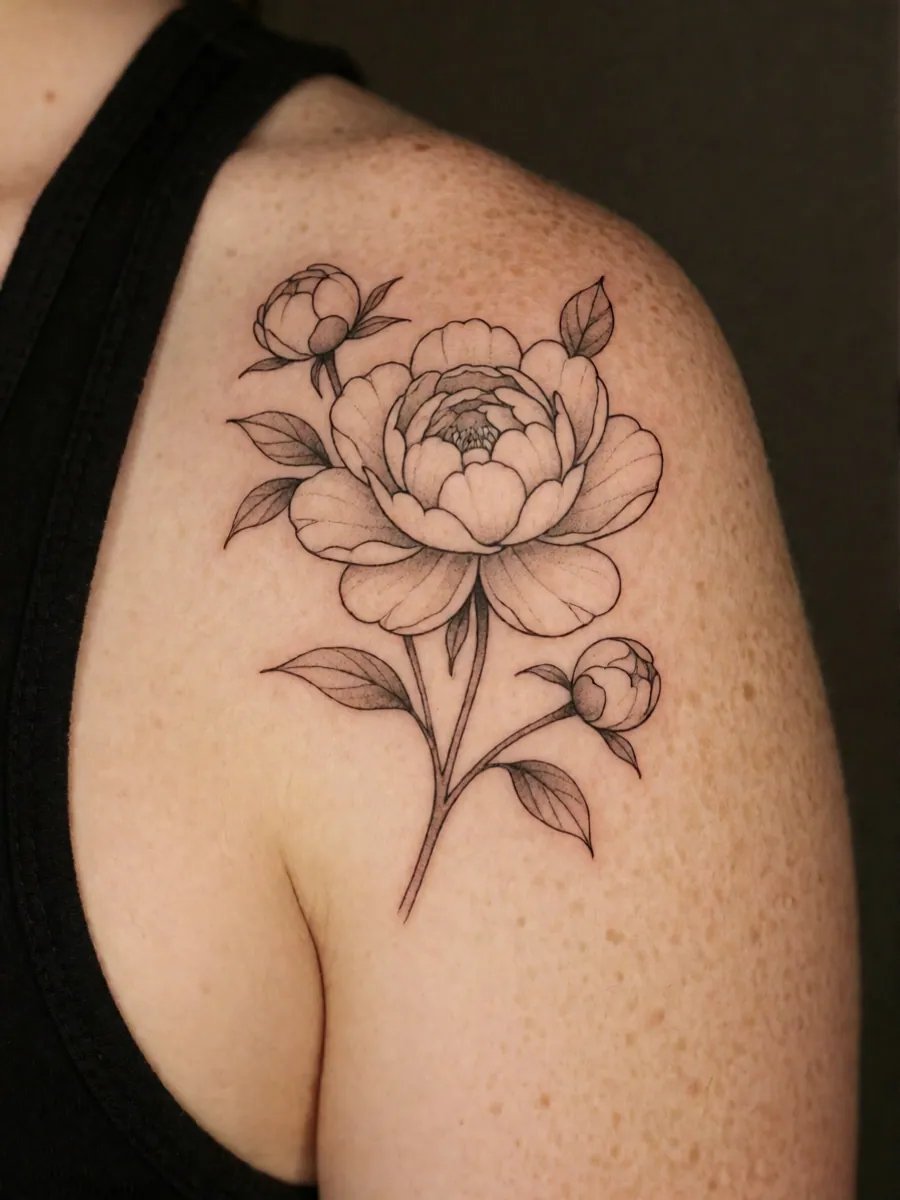 AI-generated image: not a real person, not a client.
Where to go next
- Fine line tattoos — the service, and how to book it.
- The fine line portfolio — every piece captioned as a demonstration.
- How long a tattoo takes to heal — the first weeks, before any of this.
Book a consultation
Book a consultation with the artist you want and bring your pictures. There is no charge for it, nothing is paid online, and nothing is tattooed until you have met.