Journal
How long a tattoo takes to heal
Two to four weeks on the surface, months underneath. What the first days, the peeling week and the dull stretch after it look like.
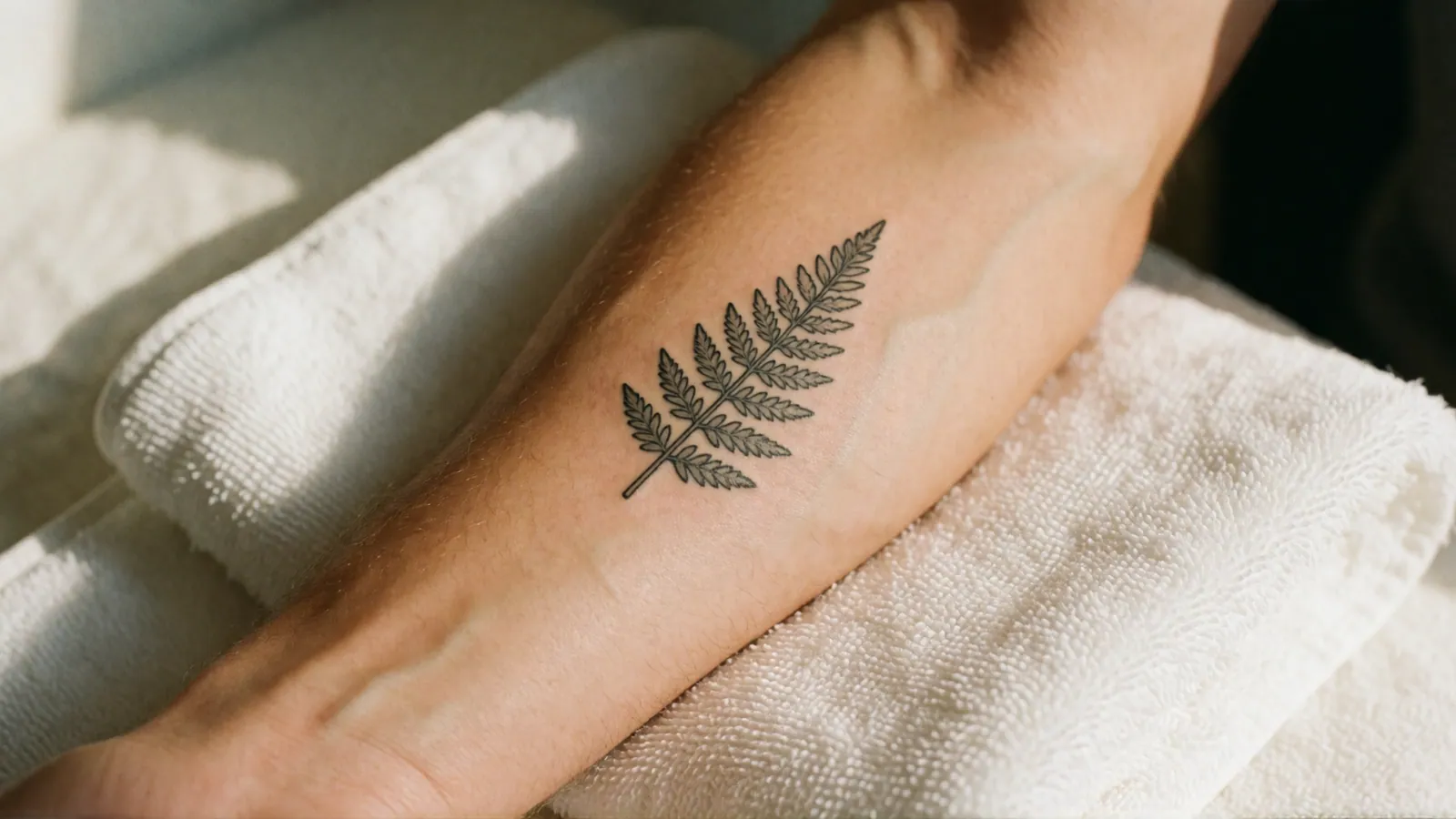
The photograph behind this heading is AI-generated: the person in it is not real, and not a client.
A new tattoo heals in two layers and at two speeds. The surface closes first and looks finished well before it is; the skin underneath takes a good while longer. Knowing which stage you are in is most of what there is to understand.
The surface of a new tattoo heals in about two to four weeks: a few tender days, a week or so of flaking and itching, then a dull, slightly cloudy stretch while it settles. The skin underneath takes a few months to finish, and the tattoo looks its clearest after that.
The first days
The tattoo is at its rawest in the first days, and most of what it asks of you is to leave it alone. The steps are short, and they come from the aftercare page in the order they happen.
Leave the film on. Your artist covers the new tattoo with a clear adhesive film. Leave it on for as long as your artist said — usually three to five days. A little fluid gathering under it is normal.
Take it off in the shower. Peel the film off slowly under warm running water, pulling it along the skin rather than away from it.
Wash it gently. Wash with clean hands and a mild, fragrance-free soap, rinse, and pat dry with a clean paper towel. Never rub.
Keep it thinly moisturized. Once it is dry, a very thin layer of a fragrance-free lotion, two or three times a day. A thick layer suffocates it.
The peeling week
Let it peel on its own. Around the end of the first week it flakes and itches. Do not pick or scratch; the ink comes away with the flake if you do.
What flakes is the top layer of skin. It looks alarming when the tattoo can seem patchy, and it is the reason the instruction is to leave the flaking alone: a flake that is picked off can take ink with it.
The dull stretch
After the flaking, most tattoos go through a stretch where they look dull and slightly cloudy, as though a film of dust sat on them. That is the surface settling over the ink while the layers beneath finish.
It is also the point where people decide their tattoo has healed badly, which is nearly always too early to decide. Wait for the tattoo to look as it will look, and then ask your artist.
The months underneath
The skin underneath takes a few months to finish, and the tattoo looks its clearest after that.
That is also why a large piece is planned in stages and not in one sitting. A piece that takes more than one session is tattooed with at least three or four weeks between sessions, so each part has healed before the next is added beside it.
Your artist says at the consultation how many sessions a piece will take, and how many weeks of healing will sit between them.
Water and sun
Two weeks out of the water and the sun. No swimming, baths, hot tubs or tanning for at least two weeks, and after that, sunscreen on it whenever it is in the sun.
That covers the pool, the bath and the beach. After that, the sun is what ages a tattoo fastest, so sunscreen becomes part of owning one.
Not every spot heals alike
Skin that bends, rubs or is handled all day is harder on a new tattoo, and it heals more slowly and less evenly than skin that is left alone. Hands, fingers and feet are the clearest case. This is the studio's touch-up policy, and it says what it does and does not promise:
After it heals. One touch-up of a piece done here is included within six months, once it has healed, if the aftercare was followed. Hands, fingers and feet heal unevenly on everybody and are touched up at the hourly rate. That is the studio's policy, not a promise about how any skin will heal.
Your written instructions
Keep the written instructions. Your artist gives you these instructions on paper as well, as the City requires; if the paper and this page ever disagree, follow the paper and call the studio.
The full set is on the aftercare page, and why a result cannot be promised explains why this site promises clean work and written instructions and never an outcome.
When to call a doctor
A doctor, not a website. Nothing on this website is medical advice. If a new tattoo or piercing shows spreading redness, heat, pus, red streaks or a fever, or you have a skin condition, a bleeding disorder, diabetes or a pregnancy to think about, ask a doctor — and if it is an emergency, call 911.
Where to go next
- Tattoo aftercare — every step, on its own page.
- How fine line tattoos age — what healing is followed by, years on.
- How to prepare for a session — what to do before the first day.
Book a consultation
Book a consultation with the artist you want and bring your pictures. There is no charge for it, nothing is paid online, and nothing is tattooed until you have met.